The Orchestration Era
Why Digital Experience Platforms Must Evolve Beyond Composition

Over just a few years, the digital landscape has been transforming more rapidly than anyone could have anticipated. Composable architecture promised to liberate enterprises from monolithic platforms. Then AI arrived and revolutionized content creation overnight. Both shifts delivered real value – and both created new complexities nobody anticipated.
The promises were bold: AI would democratize content creation. Composable architecture would end vendor lock-in. Digital experiences would become infinitely personalised, effortlessly scalable.
Some of that happened. But something else happened, too.
Enterprise marketing stacks now average 91 different services (CMSWire). Governance teams can't keep pace with AI-generated content flowing at machine speed. And trust – the fundamental currency of brand relationships – is becoming rare.
In October 2025, synthetic content surpassed human-created content on the web. By 2028, estimates suggest 90% of online content will be AI-generated. This means we’re not in a future scenario anymore. We're managing the present-day reality of what that means for brands, customers, and the platforms connecting them.
Here's what's becoming clear: the next evolution of digital experience platforms isn't about better composition. It's about sophisticated orchestration.
The Three Forces Reshaping the Future of Digital Experience Marketing
1. The tool stack has reached a breaking point
The average enterprise martech stack now exceeds 90 tools, each purchased to solve a specific problem, each generating its own data, and almost none of them talking to each other.
What's more, the martech landscape has grown from 150 solutions in 2011 to over 15,000 in 2025, according to Scott Brinker's annual Marketing Technology Landscape report. With the flood of AI-powered solutions coming to fruition every day, this number is only expected to explode even further, making it even harder to create a useful, connected stack.
2. AI isn’t delivering at the enterprise level
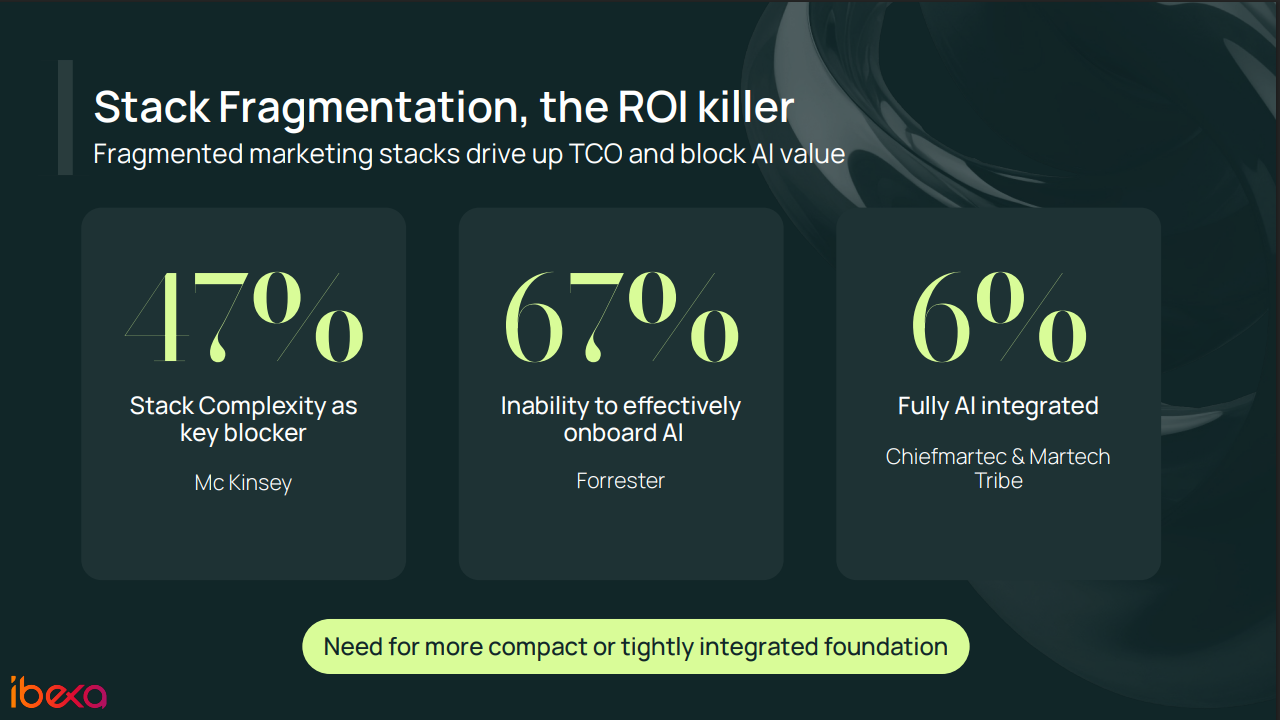
What’s more, fragmented stacks make it 67% harder to successfully onboard AI. Most enterprises have adopted AI at this point – out of enthusiasm, ambition, or fear of being left behind. But the truth is that most of these tools don’t truly take off, and they fail to deliver the ROI they promised. After all, when data is spread across countless tools and teams, it becomes nearly impossible to create a single source of truth for AI to conjure insights from.
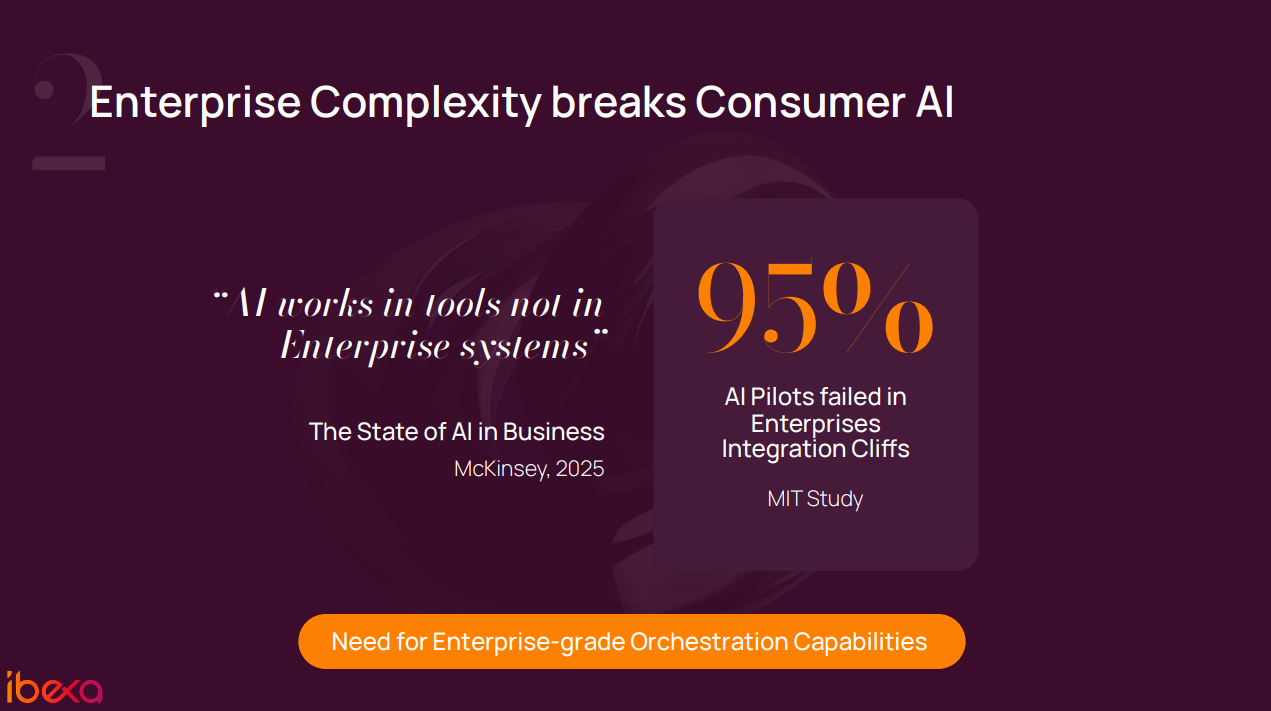
While AI works well in isolated tools, it quickly falls short in large enterprise systems. There’s a lack of good technology for orchestrating AI, making sure that it delivers results across the organisation, not just within limited tools. This will help AI create results where it actually matters – and always guided by human minds who understand strategy.
3. The Trust Collapse Nobody's Talking About
You can't trust what you see anymore. Deepfakes, AI-generated reviews, synthetic personas – the lines have blurred beyond recognition. For enterprises, this is more than just a content problem. It creates an existential brand challenge, where consumers are slowly but surely getting burned out by synthetics.
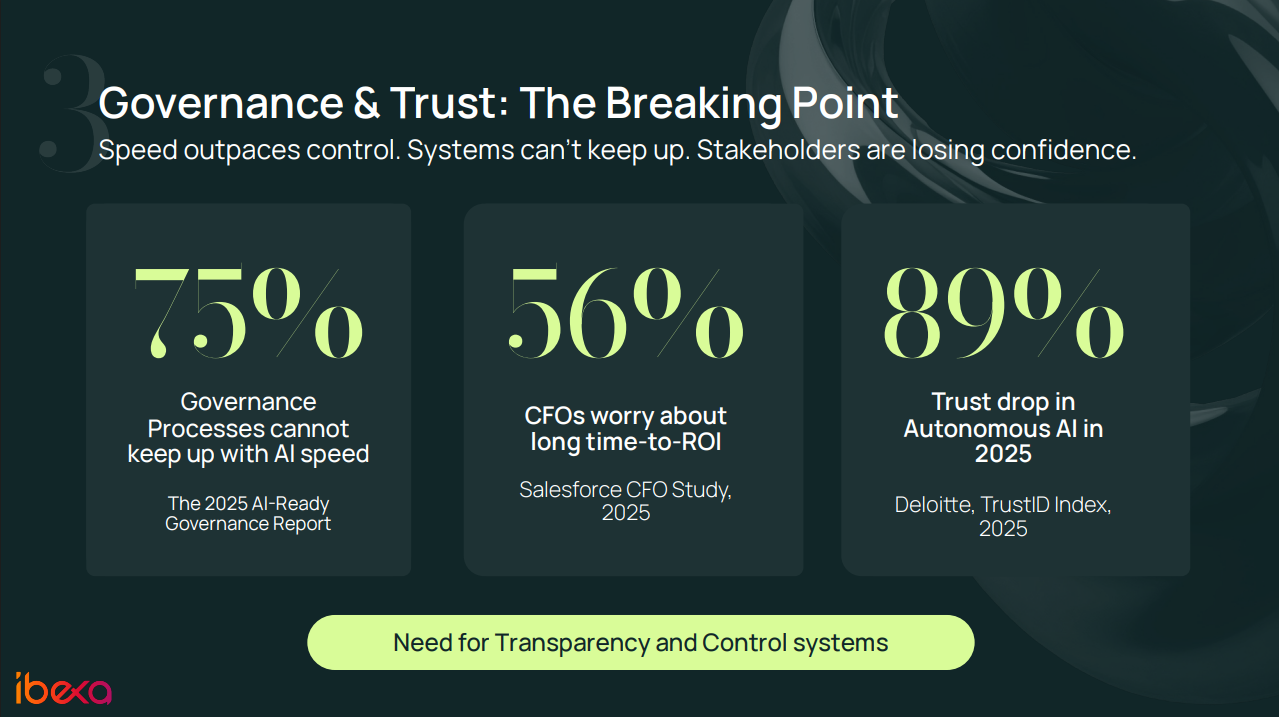
What's more, governance processes can't keep up with AI. Compliance frameworks designed for annual reviews are laughably inadequate when AI capabilities shift faster than regulations can keep up. And while AI use is expanding rapidly, trust is falling just as quickly – an 89% drop in 2025 according to Deloitte TrustID Index 2025.
The same goes for enterprise decision-makers. Complex enterprise projects aren't magic tricks, and AI isn't ready to make strategic decisions about brand integrity, regulatory compliance, or cross-departmental orchestration.
So, as much as AI has revolutionised how we work in marketing, the boost in productivity comes with a side effect: Trust becomes a rare currency that is harder and harder to maintain.
Why Composition Isn't Enough Anymore – and Orchestration is the Future
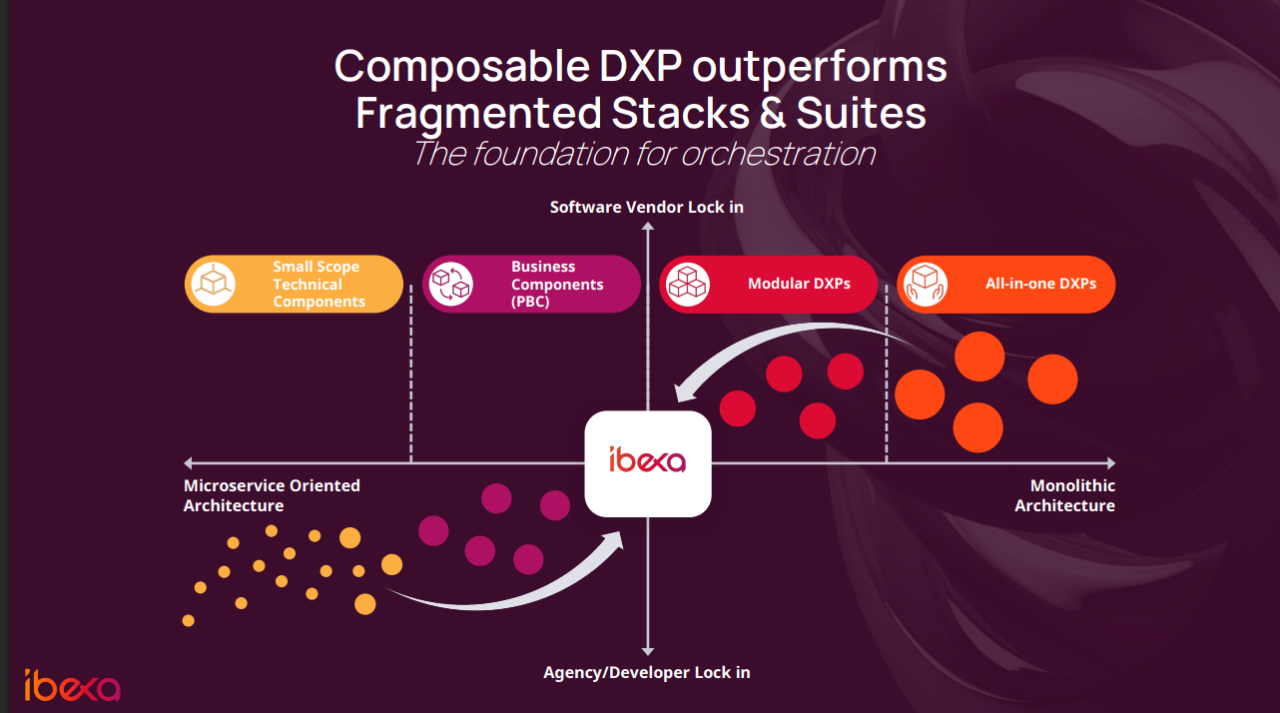
Traditional DXPs are made for composition – assembling digital experiences from modular components. Headless CMS, commerce engines, PIM systems, personalization layers – you pick your stack, integrate the pieces, and serve better, more unified digital experiences.
That model still works – but not without complications.
The problem? Enterprise complexity requires orchestration.
Real digital transformation involves coordinating people across departments, suppliers across countries, systems across clouds, and compliance requirements across jurisdictions. It's not just about connecting APIs. It's also about governance across a fragmented ecosystem moving at AI speed.
Today, stack fragmentation has reached a breaking point. The average enterprise uses 91 marketing cloud services. It’s no surprise that this level of complexity requires much more than just composing solution upon solution,
One thing is clear: There is a real need for enterprise-grade orchestration capabilities that can handle not just complex tech stacks, but the growing governance requirements that AI is shifting every day.
This is the need Ibexa is evolving to meet.
From Composition to Orchestration: The DXP Evolution
The best DXPs are evolving into orchestration platforms: systems that don't just assemble experiences but coordinate entire ecosystems. They manage the relationships between software and services, between autonomous agents and human oversight, between performance metrics and brand values.
That’s exactly where Ibexa is heading.
We won't stop doing composition. But the magnitude of performance outcomes from true orchestration is so significant that platforms must focus specifically on this capability.
Here's what orchestration-grade platforms understand:
- Software and services are inseparable. Implementations succeed or fail based on the ecosystem: the partner expertise, customer knowledge, and long-term commitment that surrounds the technology.
- Sovereignty matters. You choose where to host, which LLM to use, and which services to integrate. No lock-in. No forced dependencies.
- Openness wins. Rigid marketing clouds from the last decade can't adapt fast enough. The future belongs to platforms with open and flexible architectures.
A European Alternative at a Critical Moment
There's never been a better time for a European-born alternative to the Atlantic giants. Not out of nationalism, but necessity.
European businesses think differently about data sovereignty, privacy, long-term partnerships, and ecosystem collaboration. And right now, those values are competitive advantages more than ever before. When AI is generating content at machine speed and governance frameworks are struggling to keep up, trust becomes the scarcest resource of all. The last thing you want is your core platform operating under different priorities than your business.
The world is heading somewhere uncertain. More and more brands are actively looking to reduce their dependence on US-based technologies. They want control over where their data lives, which LLMs they use, and which partners they trust.
Ibexa offers exactly that: an alternative built on openness, choice, partnership, and trust.
The orchestration era is here.
The brands that win the next decade won't be the ones that adopted AI earliest. They'll be the ones who figure out how to govern it, direct it, and make it accountable. That's not a technology problem. It's an orchestration problem.
Ready to see orchestration in action?
Book a demo with Ibexa and see how enterprises are moving beyond composition – and taking back control of their digital future.